How neighbors are transforming grief, fear, and injustice into courage, connection, and compassionate action—and inviting the world to learn alongside them.
“We’ve been waiting for you for a long time.”
That is how Matthew Cobb describes the welcome awaiting those who come to Minneapolis this August.
It is not an invitation to visit the city as a spectator. It is an invitation to arrive with humility—to walk through places marked by grief, witness the work of healing, listen to those who have carried it, and receive what the city has to teach.
During a recent World Unity Week conversation, civic and spiritual leaders Don Samuels, Tzekiah Gabriel, Matthew Cobb, and Marty K. Casey reflected on what it means to “be Minneapolis” today. Their stories began in different places but converged around one truth:
When crisis came, ordinary people chose not to look away. They moved toward one another.
A city carrying grief
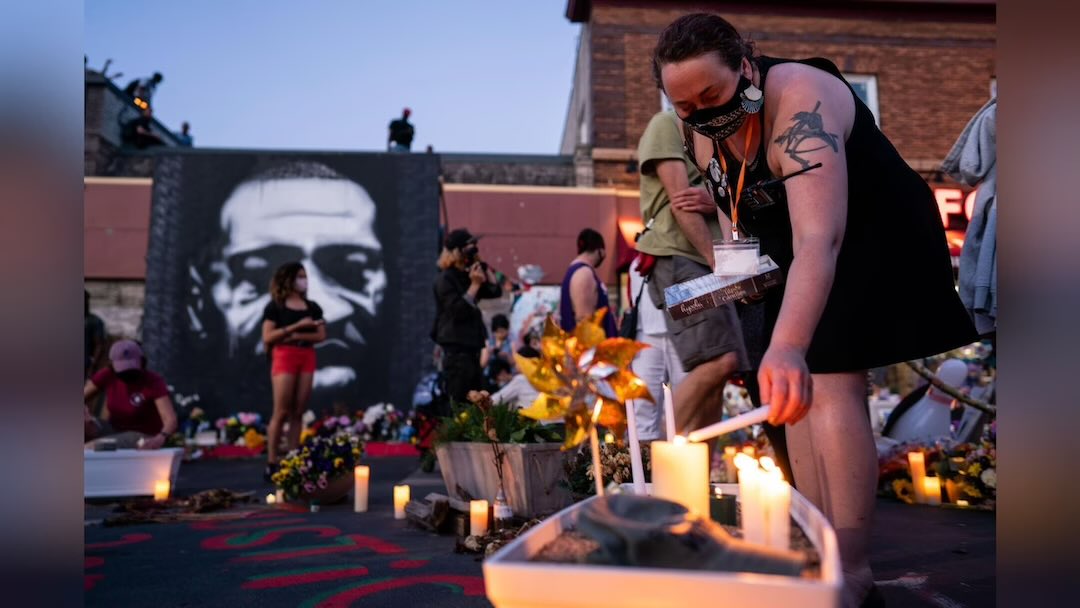
Minneapolis became a global symbol of racial injustice after George Floyd was murdered by a police officer in May 2020. The anguish traveled around the world, but it was rooted in neighborhoods already carrying the effects of racial segregation, concentrated poverty, violence, disinvestment, and fractured trust.
For Don Samuels, the work began long before 2020.
After a bullet entered the room intended for his unborn child, Samuels and his wife began organizing their North Minneapolis block. Neighbors gathered in their living room. That local effort grew, eventually leading Samuels to serve three terms on the Minneapolis City Council.
Whenever someone was killed, he held a vigil—sometimes remaining outside from morning until night in Minnesota’s bitter cold. Each gathering honored the dignity of the life lost, gave neighbors a place to grieve, and called civic leaders to respond.
Then came George Floyd’s murder, civil unrest, burned businesses, and a city struggling to find its way through collective anguish.
More recently, Operation Metro Surge brought thousands of federal immigration agents into Minnesota, generating fear and disruption across homes, schools, businesses, and places of worship.
The City of Minneapolis initially estimated $203.1 million in community impact during a single month. Its updated assessment estimates nearly $700 million in lost economic activity and related impacts between December 2025 and April 2026. City of Minneapolis
Yet, as Tzekiah Gabriel told the gathering,
“There’s more to the story.”
The compassionate choice
“When crisis occurs, there’s a choice,” Gabriel said. “People can either pull apart or pull together. In this case, people pulled together in such glorious ways.”
After George Floyd’s murder, Samuels asked a guiding question:
What is the spiritual response?
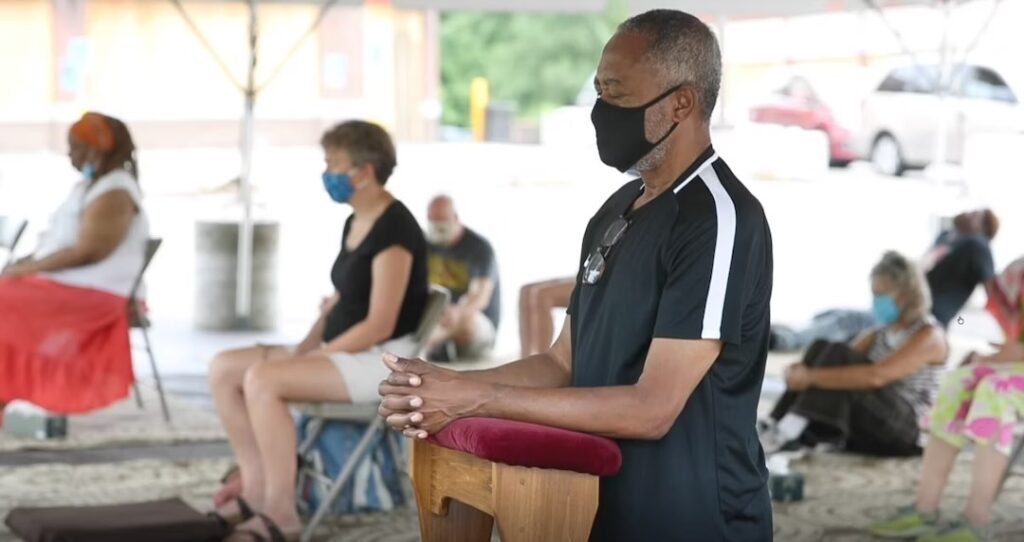
One answer became Healing Our City, a 30-day outdoor prayer and reflection space created amid the destruction on West Broadway in North Minneapolis.
For the first ten days, participants grieved for the city and examined their own complicity. For the next ten, they opened themselves to change. During the final ten, they prayed for a new future.
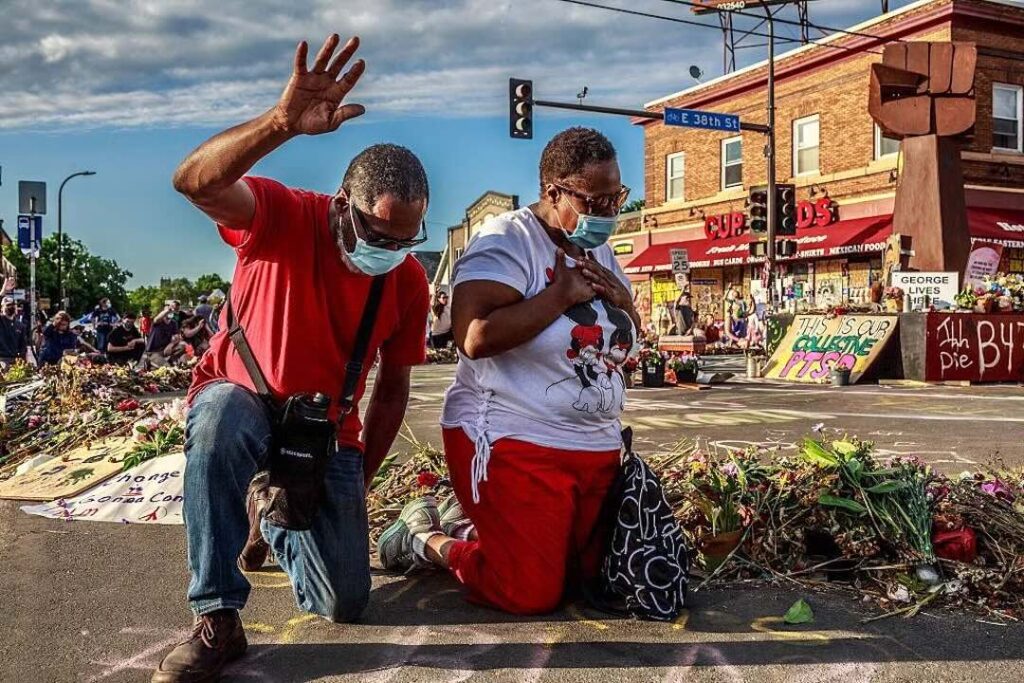
This was not an escape from the crisis. It was a disciplined way of entering it—making room for truth, grief, responsibility, imagination, and hope.
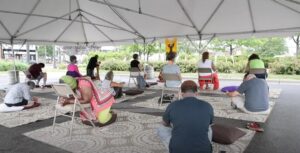
African American congregations provided daily leadership. Participants entered a carefully prepared tent in small groups, observing the distancing required during the pandemic.
A reading opened each period of silence, and a singing bowl marked its beginning and end.
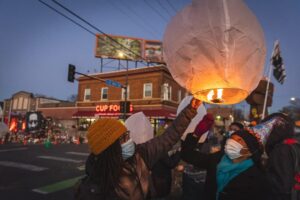
Young people created art on large canvases. Visitors tied written prayers to the tent, added reflections to a chalkboard, and recorded messages about their grief and hopes for the city.
Volunteers carried furniture, sanitized chairs, welcomed guests, created beauty, and held the space day after day.
As the trial of Derek Chauvin approached and tension rose again, the effort moved online. For approximately 83 mornings, as many as 800 people joined virtual gatherings bringing together Christian, Jewish, Muslim, Buddhist, and Hindu voices, along with artists, activists, musicians, and civic leaders.
Compassion became both a spiritual practice and a form of civic infrastructure.
When compassion becomes a system
During Operation Metro Surge, that infrastructure took thousands of practical forms.
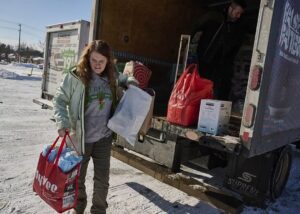
Neighbors delivered groceries, diapers, formula, medicine, and hygiene supplies. They raised emergency funds for rent and utilities.
Volunteers organized childcare, transportation, prescription pickup, temporary housing, and court accompaniment.
Churches became relief and distribution centers. Restaurants provided meals. Schools and parent groups supported frightened children and families. Community members organized legal observation, know-your-rights workshops, multilingual information networks, pastoral care, mental-health support, vigils, peaceful marches, and resource hubs.
This was love made visible:
people feeding, protecting, accompanying, organizing, welcoming, and serving one another.
No single organization directed the response. Its power came through connection.
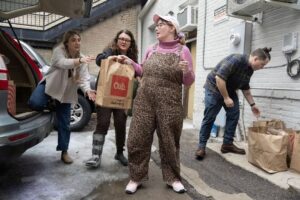
Faith communities offered space, volunteers, spiritual grounding, and trusted relationships. Businesses contributed food and material support. Lawyers and trained observers helped protect people’s rights. Schools cared for children.
Neighbors checked on elders, single parents, and families afraid to leave home. Artists helped people make meaning from their experience. Organizers connected needs with resources.
Each contribution made the next one more possible.
What emerged was more than a collection of kind acts. It was a distributed system of care.
“Peacebuilding comes in many different packages,” Gabriel said. “And it all boils down to love, compassion, and service to others.”
Organized love
To “be Minneapolis” is not to claim that the city has solved racism, violence, injustice, or division. The wounds remain. Families, schools, businesses, and neighborhoods continue to recover.
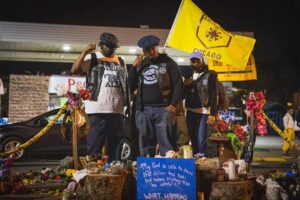
Nor is the lesson that suffering is redemptive by itself.
The lesson is that people can meet suffering with organized love
In this story, kindness is neither passive nor sentimental. It is courageous, strategic, and practical. It delivers food. It protects rights. It holds grief. It creates beauty in wounded places. It builds relationships before the next crisis arrives.
Marty K. Casey, founder of BLACKSoNDAY, expressed the principle simply:
“No matter the type of storm that hits our communities, the response of shelter and service must remain the same. Love thy neighbor.”
This is how neighbors become protectors.
This is how separate acts become shared impact.
This is how a community becomes a system of care—and how unity makes peace more possible.
Come as a pilgrim
On August 8–9, 2026, Being Minneapolis: Healing Our City, Healing Our World will invite residents and visitors into this living story.
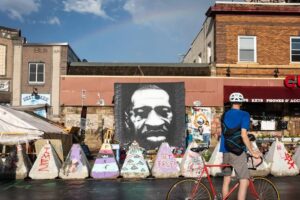
On Saturday, participants will gather at George Floyd Square and begin a peace walk through places carrying recent history and loss.
They will share food, encounter local healing initiatives, and listen to residents whose work is helping the city find its way forward.
On Sunday—the anniversary of Michael Brown’s death—the gathering will join the seventh BLACKSoNDAY, an observance centered on equal treatment and transforming truth into healing, beauty, and action.
Cobb asks visitors to understand the journey as a pilgrimage.
A tourist consumes an experience. An explorer may arrive determined to conquer a goal. A pilgrim comes ready to receive—to honor the place, relate to its people, listen for what is being asked, and allow the journey to change them.
“Pilgrimage,” Cobb said, “reconnects us with the fundamental aspect of ourselves.”
That is the invitation: come not to claim Minneapolis, fix Minneapolis, or turn its suffering into spectacle. Come to walk, grieve, listen, learn, serve, celebrate, and carry the lessons home.
What will your community choose?
Being Minneapolis is both a local gathering and a question for every community:
When crisis comes, will we pull apart—or will we pull together?
You are invited to participate:
- Join Being Minneapolis on August 8–9.
- Listen to and amplify the voices of Minneapolis residents.
- Support neighborhood-led mutual aid and healing.
- Identify and connect the systems of care where you live.
- Bring together neighbors, faith communities, schools, businesses, artists, and civic institutions before the next crisis.
- Share your own story of compassion in action.
Every city carries grief. Every city also carries people capable of becoming shelter for one another.
Minneapolis is not offering a finished solution. It is offering a living practice:
Tell the truth.
Honor the grief.
Choose one another.
Turn love into action.
Build peace through unity.