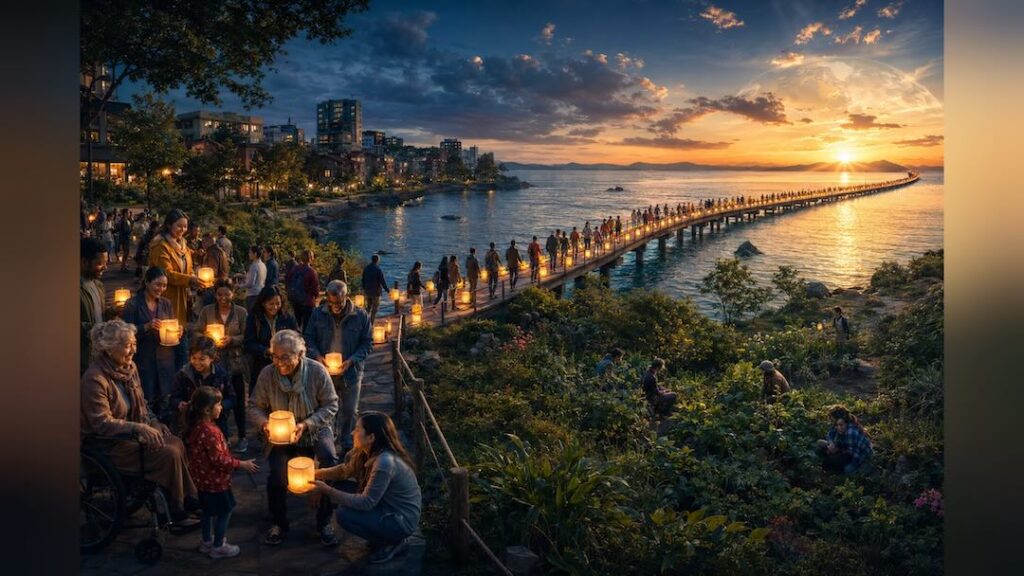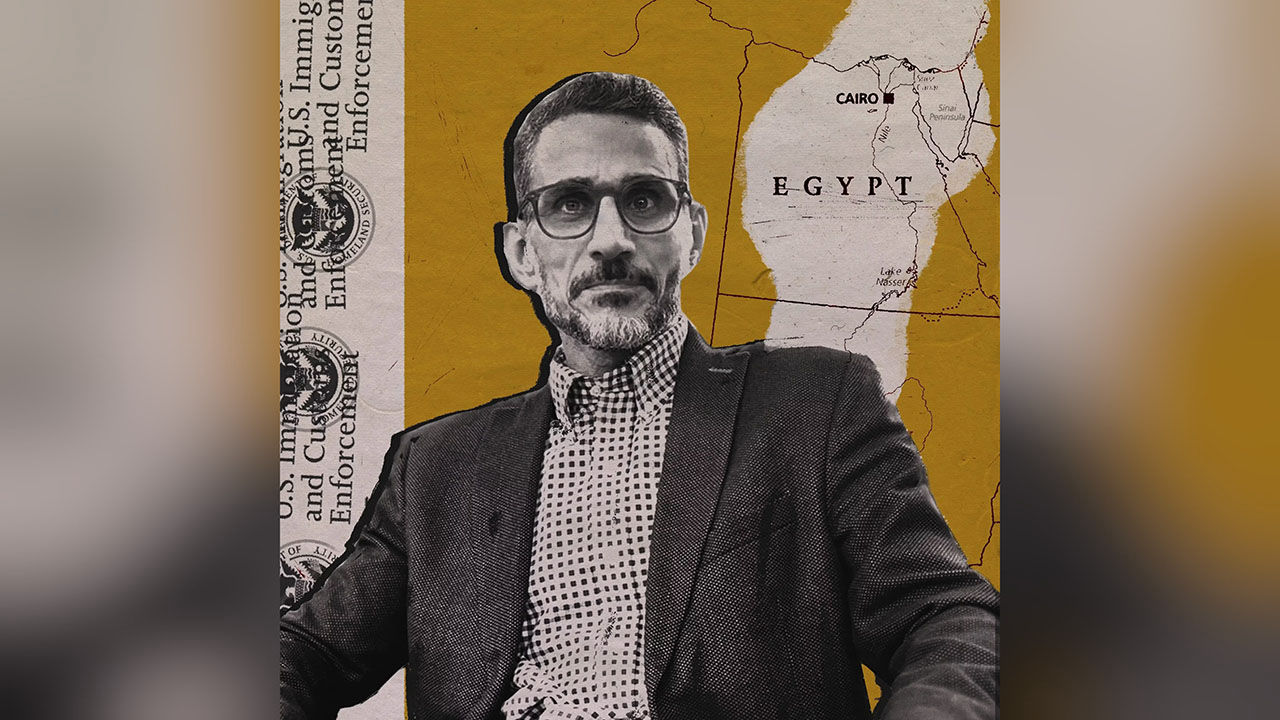
When Ayman Soliman was taken into immigration detention, the people of Cincinnati refused to let him disappear. Their response shows how a community can become a system of care—and how compassion becomes visible, connected and consequential.
On July 9, 2025, Ayman Soliman arrived at an Immigration and Customs Enforcement office in Blue Ash, Ohio, for what he expected to be a routine appointment.
Instead, he was taken into custody.
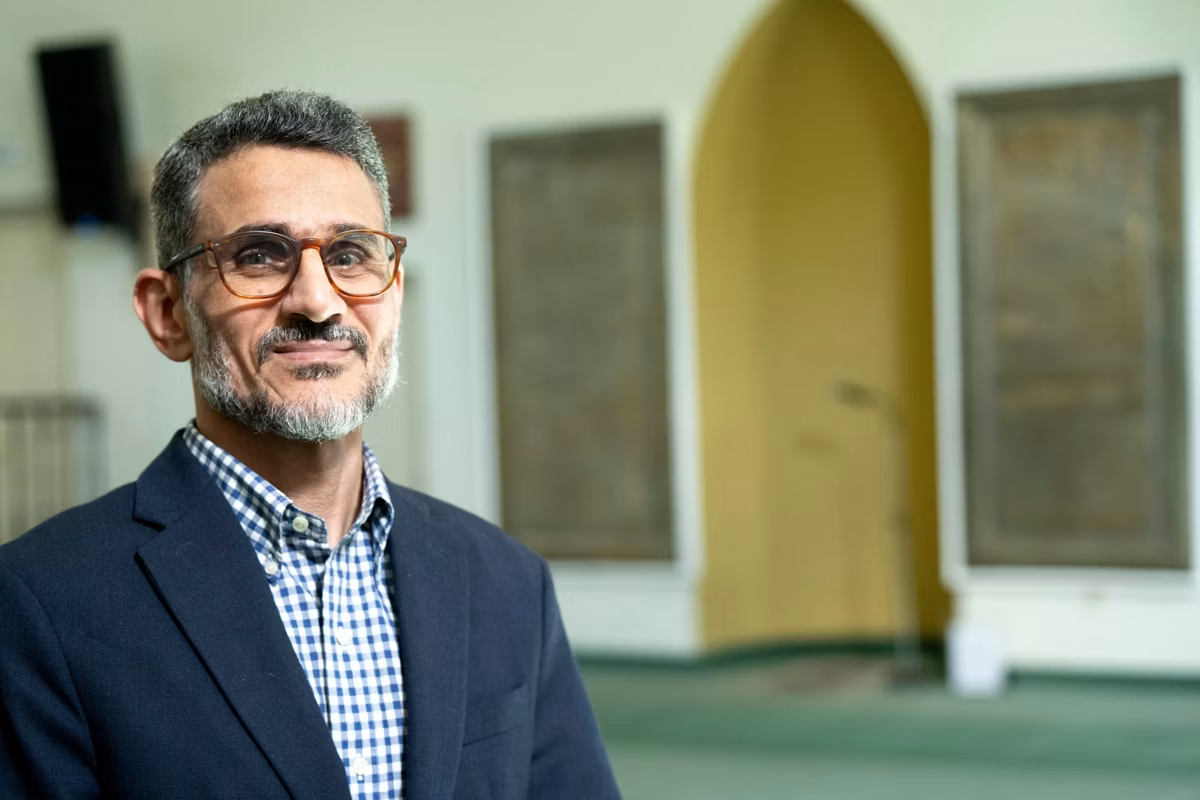
Soliman, an Egyptian-born asylum seeker who had lived legally in the United States for more than 11 years, would spend the next 73 days in detention. He faced the possibility of being deported to Egypt, the country he had fled because he feared persecution and believed his life would be in danger if he returned.
In a matter of hours, the life he had built in Cincinnati was placed in jeopardy.
Soliman was not only a resident of the community. He had served it. As a chaplain at Cincinnati Children’s Hospital, he had accompanied seriously ill children and their families through moments of fear, grief, uncertainty and hope. He sat beside hospital beds, listened without judgment and helped people of many faiths—and no faith at all—find comfort and meaning during some of the most difficult moments of their lives.
Then the caregiver became the one in need of care.

Inside detention, Soliman was separated from the community he had served and reduced, in the eyes of the system, to a file and a case number. The future he had spent years building could suddenly disappear.
But the people of Cincinnati refused to let his humanity disappear with it.
A community refuses to look away

Friends organized protests. Attorneys worked tirelessly on his behalf. Faith leaders from different traditions joined their voices. Community members contacted elected officials, wrote letters, prayed, posted on social media and spoke publicly about his case.
Many had never met Soliman. They stood with him anyway.
Friends organized protests. Attorneys worked tirelessly on his behalf. Faith leaders from different traditions joined their voices. Community members contacted elected officials, wrote letters, prayed, posted on social media and spoke publicly about his case.
Many had never met Soliman. They stood with him anyway.
They did not remain passive while a neighbor was placed in danger. They made a choice:
his life, his dignity and his story mattered.
Some took personal risks. Elizabeth Diop, a fellow chaplain who visited Soliman in jail and spoke publicly about his situation, lost her job at Cincinnati Children’s Hospital after giving a television interview about his detention.
These were not isolated acts of sympathy. Together, they became a living network of protection, advocacy and care.
A community became a system of care.
That system did what compassionate communities do at their best:
it recognized suffering, formed relationships around it and transformed concern into coordinated action.
One person made a phone call. Another offered legal help. Another organized a gathering. Another spoke from the pulpit. Another wrote a letter. Each act strengthened the others.
Individual compassion became collective courage.
On September 19, 2025, after 73 days in detention, Soliman walked out of the Butler County Jail.
One year later, he offered this message to everyone who had stood beside him:
“Thank you for saving my life.”
Choosing hope without denying the harm
Soliman does not minimize what happened to him.

He continues to carry the trauma of his detention. Release did not erase the fear, uncertainty or pain of those 73 days.
Healing, he acknowledges, is still taking place.
Yet when people ask whether the experience has made him bitter, his answer is no.
He has seen too much compassion to surrender to bitterness.
That does not mean excusing injustice. Soliman speaks directly about the failures of an immigration system that can place people seeking protection in danger, strip them of due process and reduce complex human lives to legal categories and docket numbers.
He believes immigration laws can be enforced without abandoning fairness, dignity and humanity. Justice, he reminds us, requires more than enforcement. It requires recognizing the human being inside every case.
His refusal of bitterness is therefore not a retreat from truth. It is a moral choice about what will define his life.

The detention caused real harm. But it will not have the final word.
The final word belongs to the people who carried hope to him when he could not carry it himself—and to his decision to receive that hope, protect it and pass it forward.
“Hope is strongest when it is shared,” he wrote.
Sometimes, he explained, other people carry hope for us until we are strong enough to carry it ourselves.
This is compassion not as a feeling, but as a force.
From Cincinnati to Minneapolis
Soliman’s story belongs to Cincinnati, but its meaning reaches far beyond one city.

It speaks directly to the work unfolding through Being Minneapolis: Healing Our City. Healing Our World.
Minneapolis has become known around the world for moments of violence, injustice and division. The murder of George Floyd in 2020 revealed profound wounds within the city and the nation. More recently, immigrant communities have experienced renewed fear and uncertainty amid intensified federal enforcement.
But the headlines do not tell the whole story.
Beneath them are neighbors protecting neighbors. Faith communities opening their doors. Artists, elders, organizers and young people rebuilding trust. Residents choosing healing over hatred, relationship over isolation and courage over silence.
Cincinnati made the same choice when Soliman was detained.
The circumstances are different, but the pattern is shared:
when institutions cause harm or fail to protect human dignity, communities can organize themselves into networks of care.
They can refuse to let a person stand alone.
They can cross religious, racial, political and cultural divisions to defend a shared humanity.
They can make compassion visible through public action, connect individual efforts into a collective response and make that response consequential in the life of another human being.
Making compassion visible, connected and consequential
The Compassion Games invite us to notice and strengthen these patterns.

Compassion becomes visible when people tell the story of what they witnessed and what they did.
It becomes connected when separate acts—legal advocacy, prayer, protest, storytelling, friendship and public witness—are recognized as parts of one shared effort.
It becomes consequential when those actions protect dignity, change outcomes, restore hope and save lives.
Soliman’s story demonstrates all three.
It also challenges us.
Who in our own communities is living in fear or being pushed out of sight?
Who needs someone to speak, organize, listen, accompany or stand beside them?
What might become possible if our schools, congregations, organizations, neighborhoods and cities saw themselves not as separate institutions, but as participants in a shared system of care?
We do not need to wait for permission to begin.
We can learn the names behind the headlines. We can listen before judging. We can support those who defend human rights. We can stand with immigrants, refugees and asylum seekers whose futures hang in uncertainty.
We can connect our individual efforts so that no one person or organization is left to carry the work alone.
And we can report these acts of compassion so that others can see what is possible, join the effort and strengthen the pattern.
The America we are capable of becoming
Ayman Soliman came to the United States seeking safety. He built a life centered on helping children and families face suffering with courage and meaning.
When his own life was threatened, his community returned that care.
Their actions did more than help secure his freedom. They preserved his ability to believe that America can still live up to its highest ideals.

His story does not ask us to ignore injustice or pretend that kindness alone can repair broken systems. It asks us to understand that systems change when people refuse to surrender their humanity within them.
Healing a person, healing a city and healing our world are not separate endeavors.
They begin in the same place:
seeing another person’s dignity, recognizing that their fate concerns us and choosing to act together.